EdgeAI @ Burning Man at Google Dev Day
Notes from a 10-minute talk on running a voice AI fully offline on a Raspberry Pi 5 inside a Burning Man helmet.
A 10-minute talk for Google Dev Day about the MindControl Helmet: what it takes to run a voice assistant with no cloud at all, on hardware you can wear in the desert.
I didn’t go to Burning Man myself. The helmet was built for someone else to wear on the playa.
The short version
- The desert has no reliable internet, so the AI has to live on the helmet.
- A Raspberry Pi 5 runs the whole pipeline: wake word, speech to text, LLM, text to speech.
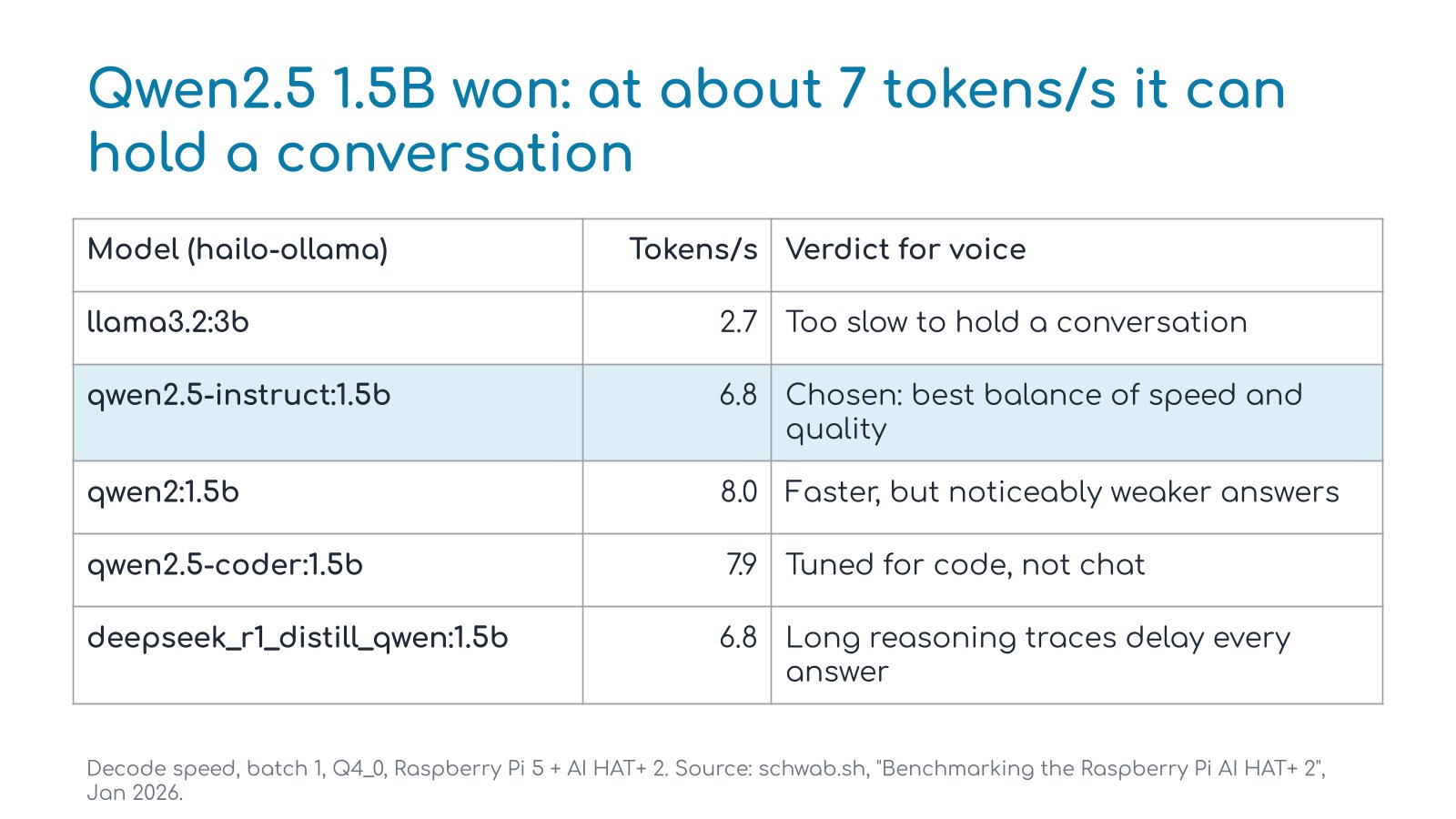
- Qwen2.5-Instruct 1.5B at about 7 tokens/s is fast enough to hold a conversation. Bigger models were too slow; a reasoning model spent too long thinking out loud.
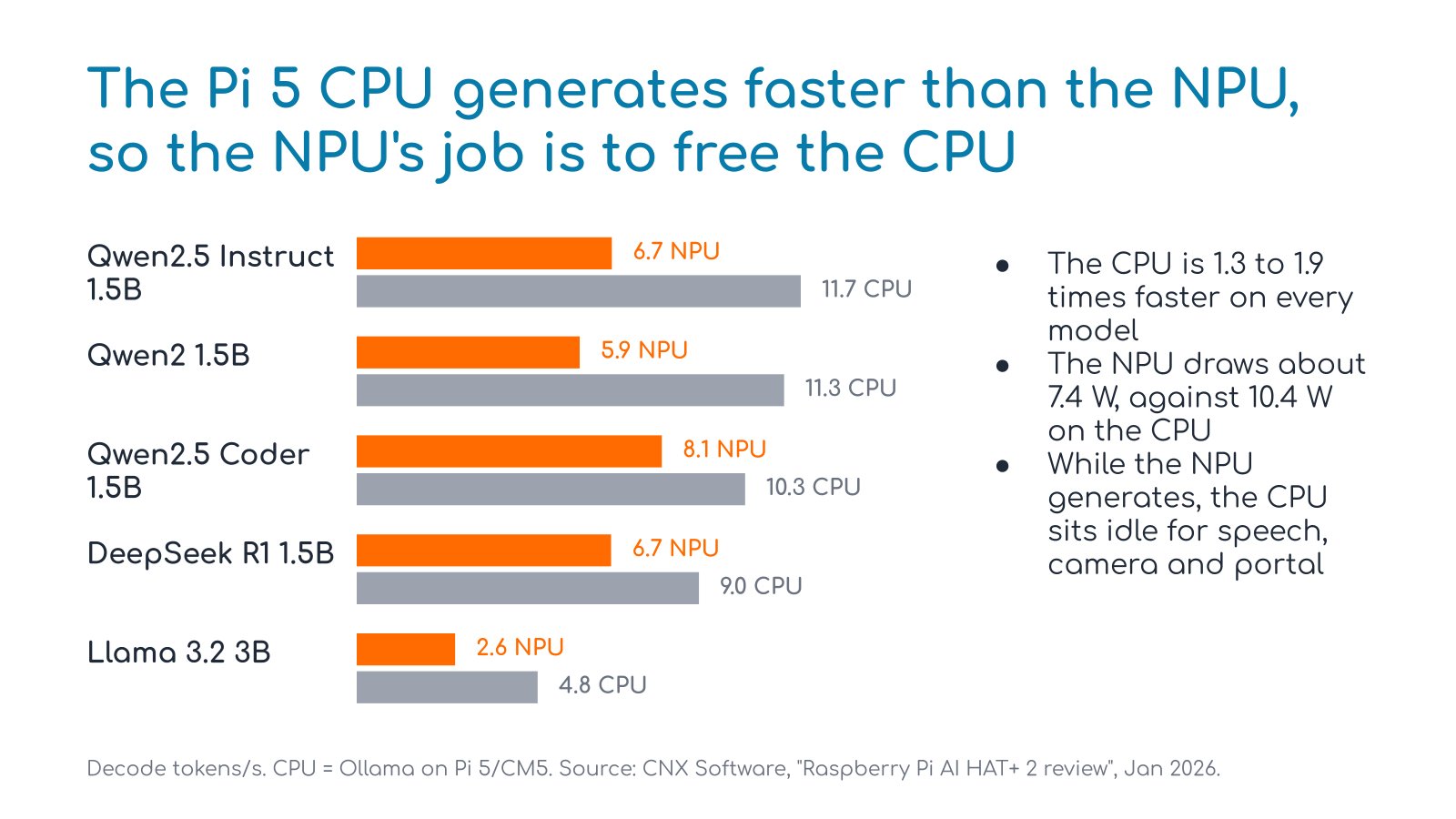
- The Hailo-10H NPU is not faster than the Pi 5 CPU at LLMs. Its job is to free the CPU for everything else the helmet does.
Cloud first, then local
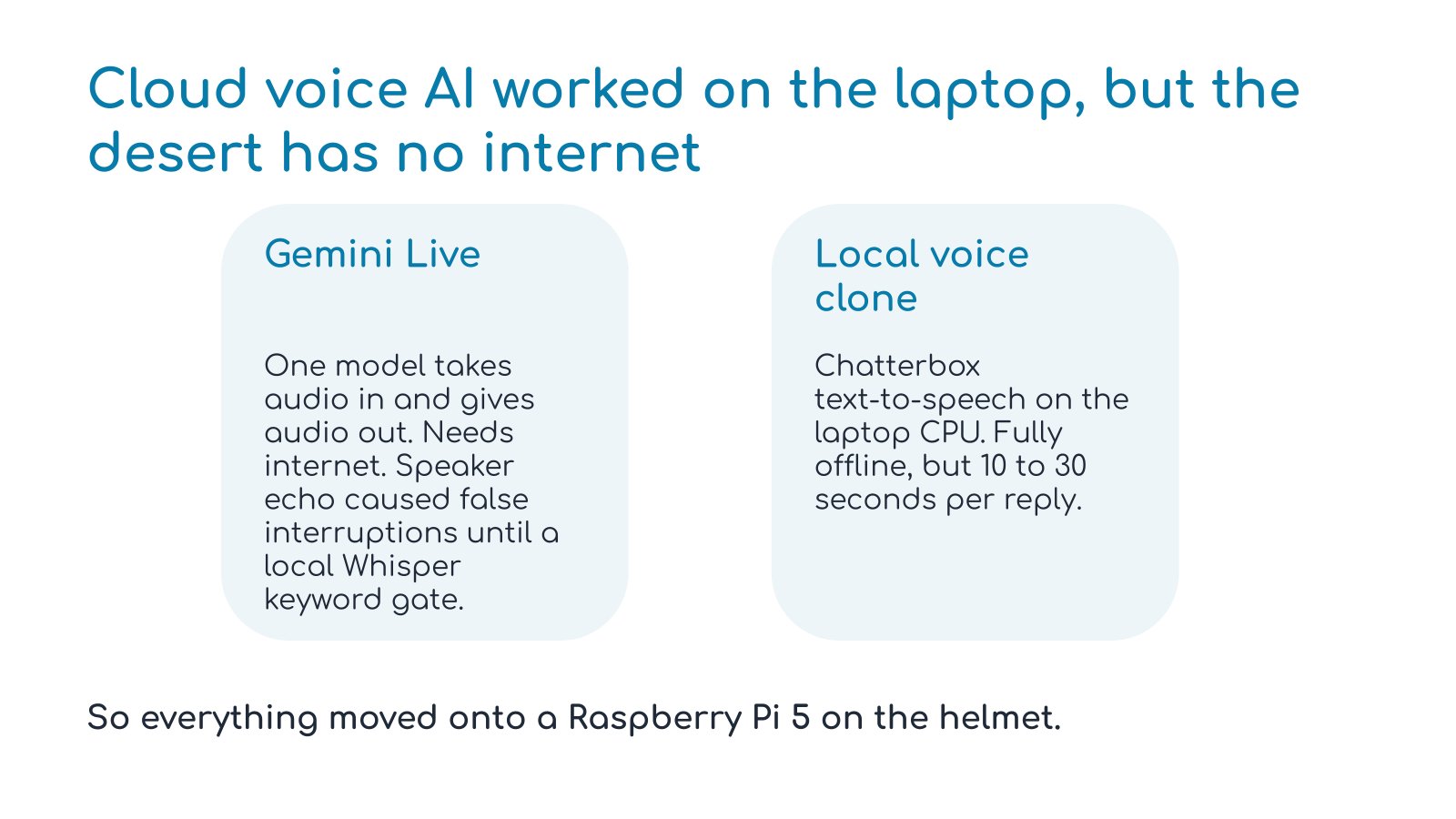
The first prototype ran on a laptop and compared three setups: a classic chain (faster-whisper, the Claude API, ElevenLabs), Gemini Live doing audio in and audio out with a single model, and a local Chatterbox voice clone. The cloud setups sounded good but needed internet. The local clone took 10 to 30 seconds per reply. Neither works on the playa.
The local stack
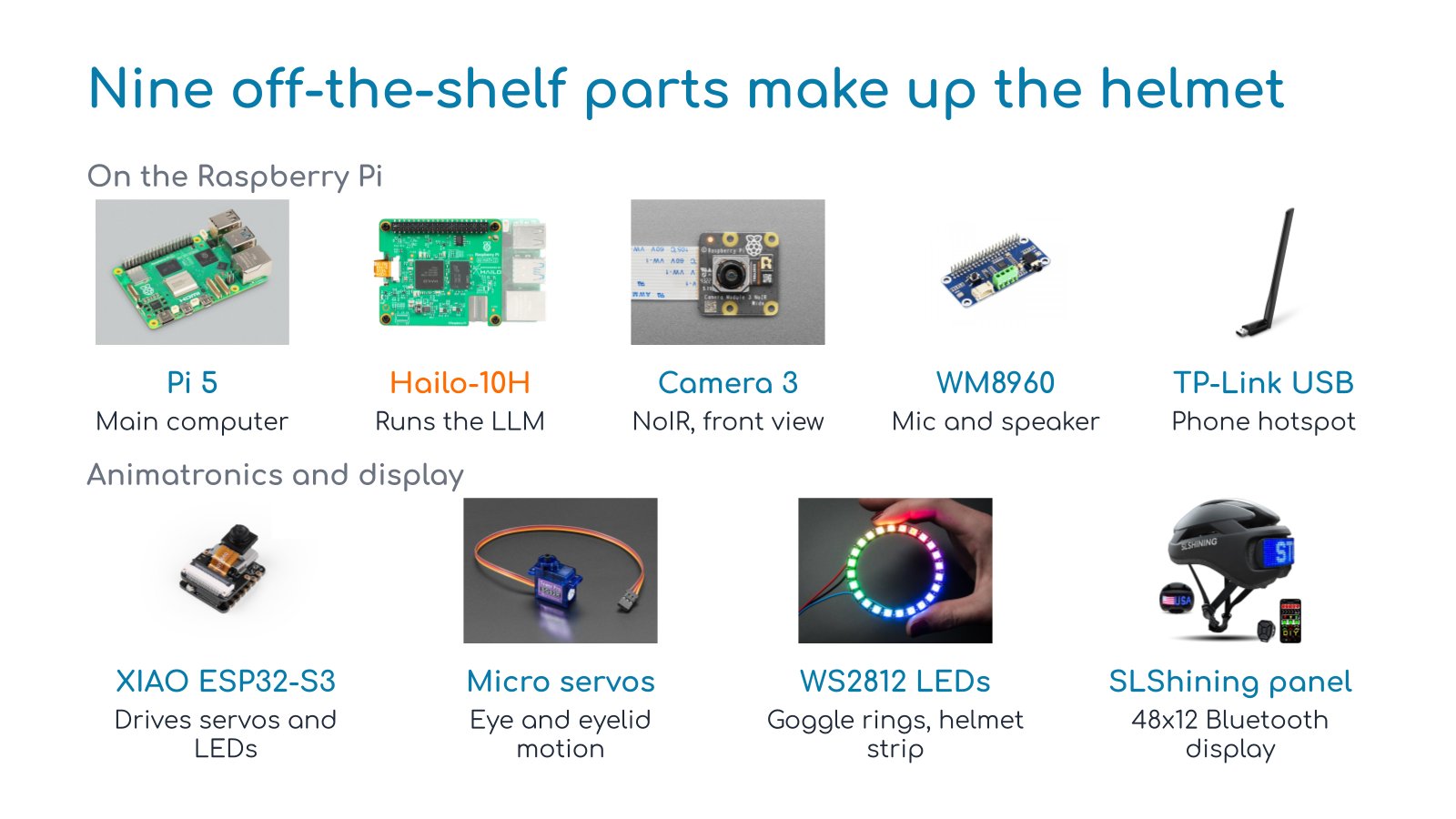
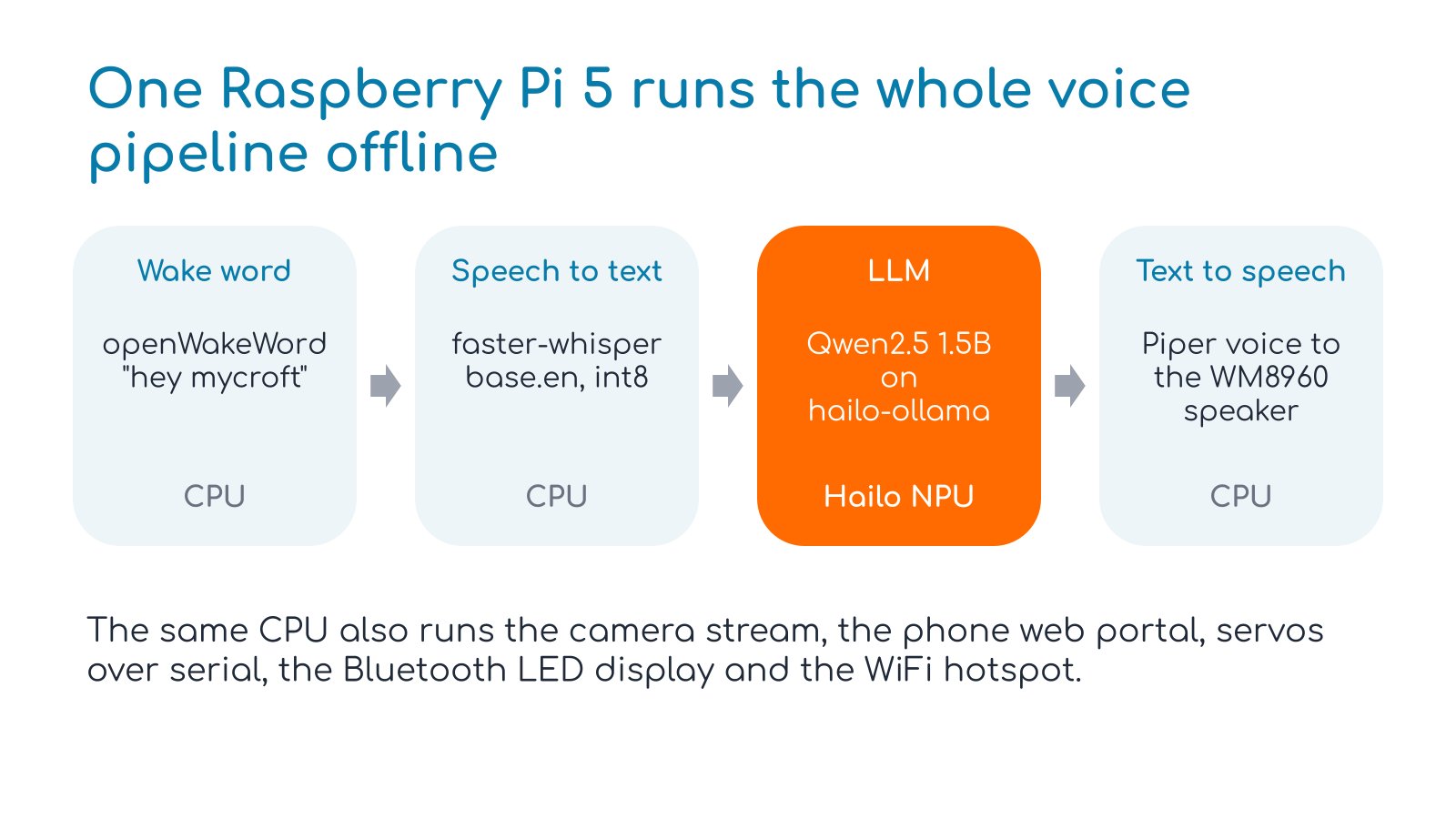
| Step | Tool | Runs on |
|---|---|---|
| Wake word | openWakeWord, “hey mycroft” | CPU |
| Speech to text | faster-whisper base.en, int8 | CPU |
| LLM | Qwen2.5-Instruct 1.5B on hailo-ollama | Hailo-10H NPU |
| Text to speech | Piper, lessac-medium | CPU |
Text to speech is nearly free (about 0.03 s of compute per second of audio), so the LLM is the bottleneck. Streaming the reply one sentence at a time means the helmet starts talking before the answer is finished.
NPU vs. CPU
Public benchmarks show the Pi 5 CPU beating the Hailo-10H on every model hailo-ollama offers, for example 11.7 vs. 6.7 tokens/s on Qwen2.5 1.5B (CNX Software). The NPU uses less power and leaves the CPU idle, which matters on a helmet whose CPU also handles speech, the camera stream, the phone portal and the LED display.
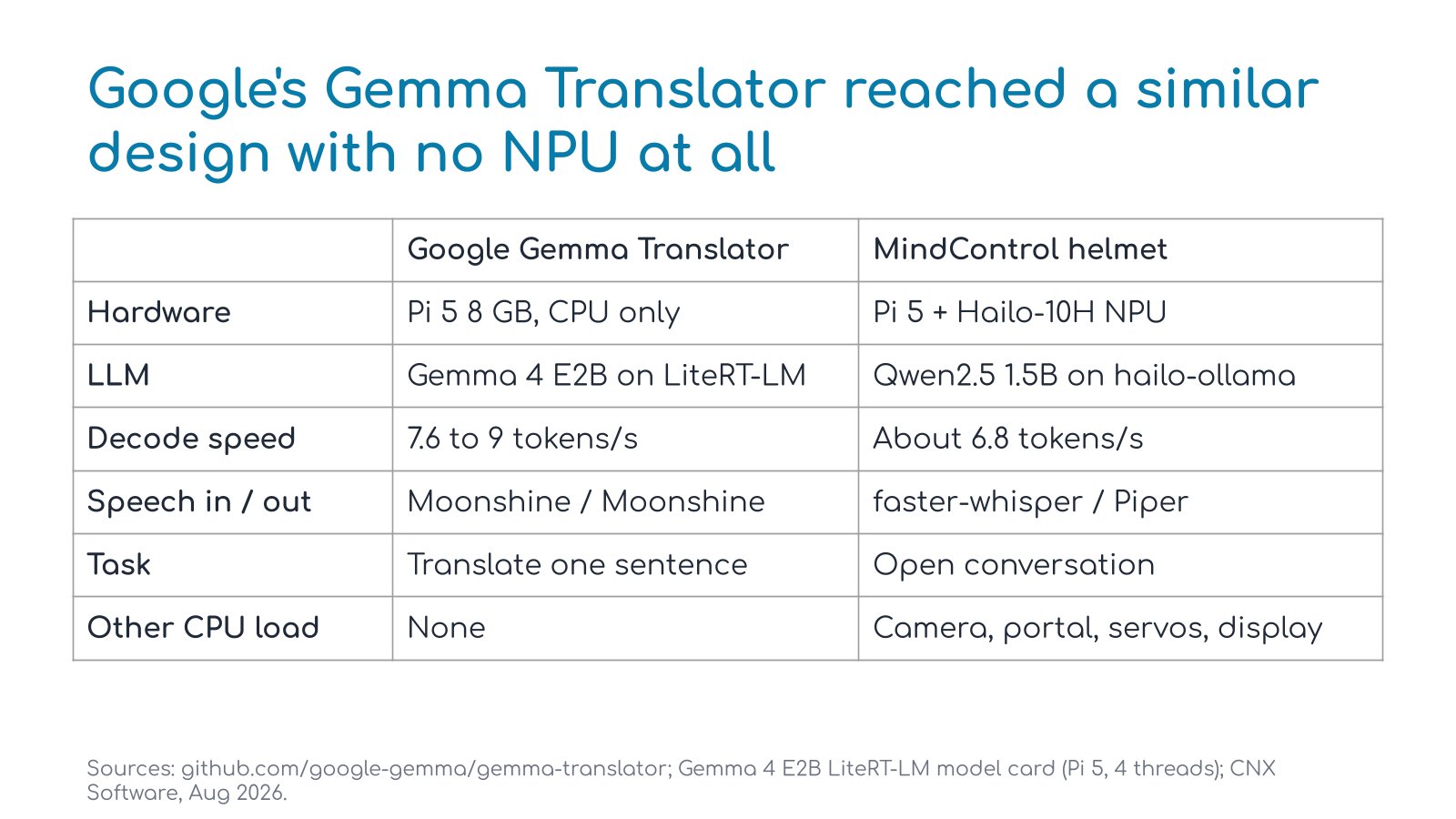
Google’s own Gemma Translator makes the same point from the other side: Gemma 4 E2B on LiteRT-LM runs a full offline voice pipeline on a CPU-only Pi 5 at 7.6 to 9 tokens/s. One AI job fits on the CPU; the helmet runs several.
What broke
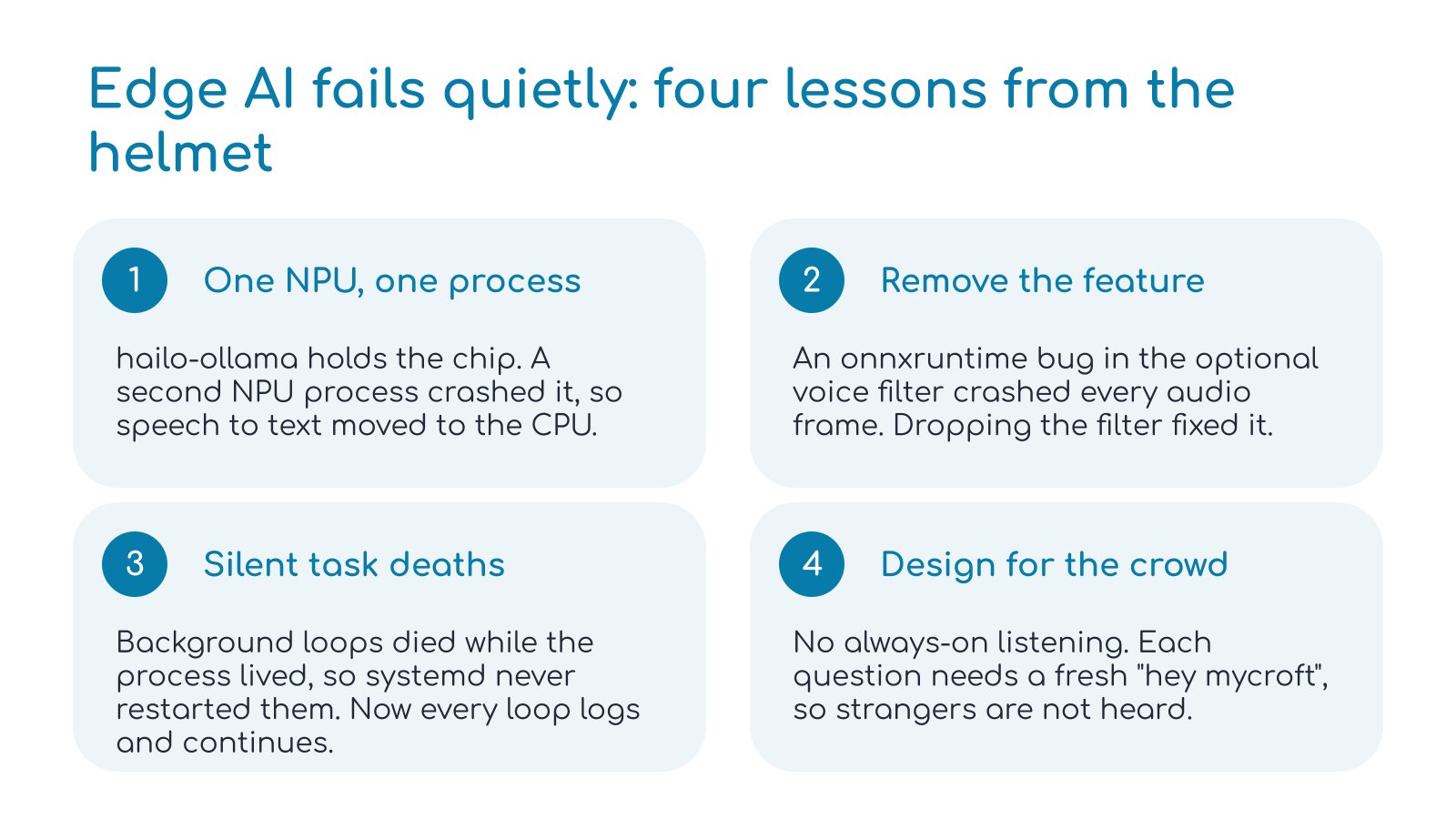
hailo-ollamaowns the NPU for its whole lifetime, and a second NPU process crashed it. Speech to text moved to the CPU.- An onnxruntime bug in an optional voice filter crashed every audio frame. The fix was turning the filter off.
- Background loops died silently while the process stayed up, so systemd never restarted them.
- The wake word is “MY-kroft”, not “Microsoft”. That one took a while.
Bonus: the LED display
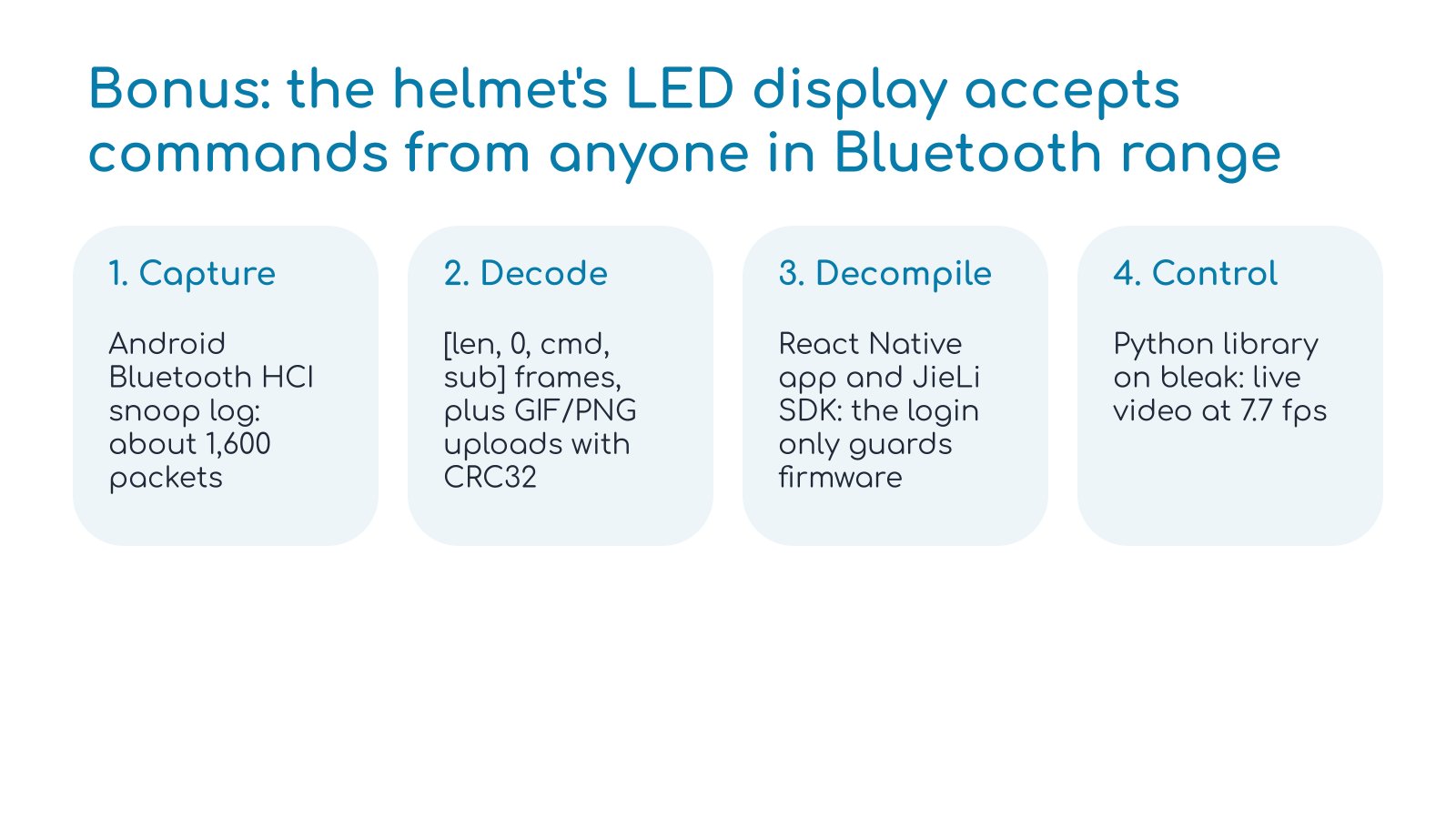
The 48×12 LED matrix on the back of the helmet came with a phone app. A Bluetooth snoop log, a decompiled React Native app and a JieLi SDK later, it turned out the display accepts commands from anyone in Bluetooth range, no authentication. A small Python library now drives it directly, including live video at 7.7 fps.
Takeaways
- Choose the model for latency, not size.
- Give the LLM its own chip when the CPU has other work to do.
- Stream replies in sentences so speech starts early.
- Plan for silent failures: guard every background loop and let systemd retry forever.